
Family Caregiver Challenges:
Stress, Support, and Care Coordination
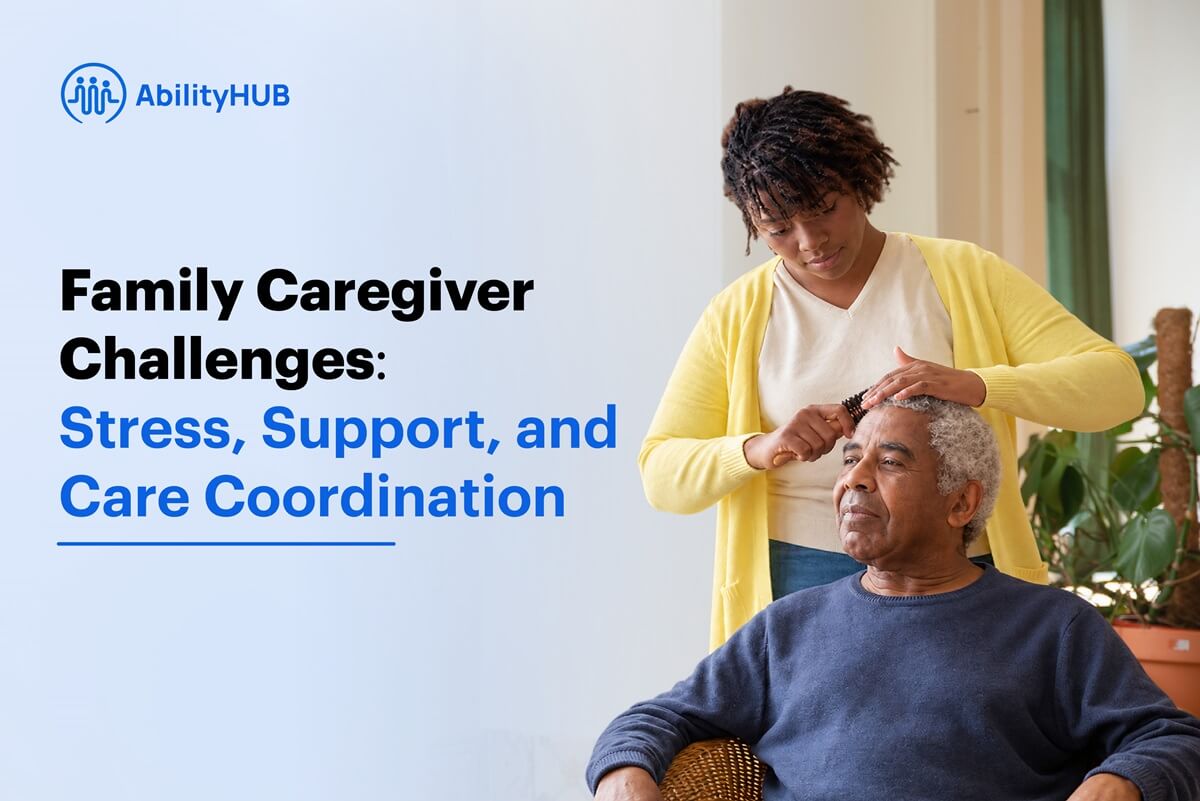
Caregiving often starts with a simple intention: to be there for someone you love. It might mean helping your parents manage their medications, taking them to appointments, preparing meals, or checking in to make sure they’re doing okay. Over time, though, these small responsibilities can become a big part of your everyday life.
You might find yourself balancing work, family commitments, and your own personal needs while making sure your loved one gets the support they need. And somewhere in between, it’s easy to put yourself last.
According to the Caregiving in the U.S. 2025 report by AARP and the National Alliance for Caregiving, 64% of family caregivers report emotional stress related to caregiving. Supporting a loved one can be meaningful, but it can also be exhausting, especially when you feel responsible for keeping everything running smoothly.
Maybe you’ve had to reschedule your own plans because an appointment came up unexpectedly. Perhaps you’ve missed a meal while coordinating care or spent your evening answering messages from family members who want an update. These moments may seem small on their own, but they can add up with time while caregiving.
If any of this sounds familiar, you’re not alone. Understanding the challenges you’re facing is a good first step toward making caregiving more manageable for both, your loved one and you.
The Hidden Challenges of Family Caregiving
Caregiving involves much more than helping someone with daily activities. It also means making decisions, keeping people informed and managing responsibilities while trying to maintain a sense of normalcy in your own life.
Here are some common challenges many family caregivers experience.
1. Caregiver Burnout: When Everyone Else Comes First
When someone you love needs support, it’s natural to focus on their needs. You remember their appointments, keep track of medications, prepare meals, and make sure the little things don’t get overlooked.
But who’s checking in on you?
You may skip meals because you’re busy, lose sleep while worrying about what needs to be done the next day, or put off your own appointments because something else feels more urgent. Even when you get a little time to yourself, you might feel guilty for stepping away.
Over time, the constant demands of caregiving can leave you physically and emotionally drained. You may feel irritable, overwhelmed, or disconnected from the things you used to enjoy.
Caregiver burnout isn’t a sign that you don’t care enough. It can be a sign that you’ve been carrying too much for too long without enough support.
Recognizing your own needs matters. You don’t have to wait until you’re completely exhausted to ask for help or make time for yourself.
2. The Time and Stress of Constant Coordination
One of the less visible parts of caregiving is everything that happens behind the scenes.
There’s the appointment you need to schedule, the prescription you need to pick up, the family member you need to update, and the ride you need to arrange. If plans change, you may have to reorganize the entire day.
And when several people are involved in someone’s care, communication can become another responsibility. You might find yourself answering the same questions repeatedly, forwarding appointment details, or trying to remember whether someone has already taken care of a particular task.
This can be especially challenging when you’re also working or managing responsibilities at home. Even when other family members want to help, they may not know what needs to be done or when they can step in.
Over time, the mental load of keeping everyone informed and organized can become exhausting. The solution isn’t necessarily to do everything faster. Sometimes, it’s about finding a better way to share information and responsibilities.
3. Feeling Like You're the Only One Managing Everything
Caregiving often works better when it’s a shared effort. Family members, friends, neighbors, and professional caregivers may all be able to contribute in different ways.
Yet, one person can still end up managing most of the coordination remembering appointments, explaining care needs, following up on tasks, and making sure everyone is on the same page.
The Caregiving in the U.S. 2025 report highlights just how much responsibility family caregivers carry. It found that:
- 70% monitor the health conditions of the person they care for.
- 64% communicate with the care recipient’s healthcare providers.
- 58% advocate for the care recipient’s needs.
These responsibilities take time, attention, and communication. When important information is spread across text messages, phone calls, notebooks, and separate calendars, keeping track of everything can become even harder.
Having people who are willing to help is important. But making that help easier to organize matters, too. A shared calendar, a clear list of responsibilities, and a reliable way to communicate updates can make it easier for everyone to contribute.
You shouldn’t have to be the only person who knows what’s happening.
4. Finding Time for Yourself Without Feeling Guilty
When you’re caring for someone, you love, taking a break can feel harder than it sounds.
You might wonder whether everything will be okay if you step away for an hour. You may worry about missing an important call or leaving a task unfinished. Even when someone offers to help, you might feel uneasy about handing over responsibilities.
Respite care can provide caregivers with temporary relief, but not everyone who needs it is able to access it. The report also cites that 39% of caregivers say respite care would be helpful, yet only 13% use it. Challenges can include cost, limited availability, concerns about the quality of care, and difficulty trusting someone else to take over.
Of course, taking care of yourself isn’t limited to arranging respite care. It can also mean eating a proper meal, going for an evening walk, spending time with a friend, or simply taking a few minutes to breathe without thinking about the next task.
Small Steps to Make Caregiving More Manageable
You may not be able to change every part of your caregiving situation. Appointments will still come up, plans may change, and some days will be more difficult than others.
However, a few simple changes to how you organize daily tasks, share responsibilities, and keep track of important information can make caregiving a little easier to manage.
1. Make Time to Check in with Yourself
Try taking a few minutes each day to reflect on how you’re feeling. Are you getting enough rest? Have you been feeling unusually stressed or overwhelmed? Are you making time for things you enjoy?
Writing down your thoughts or keeping a simple wellness journal can help you notice patterns over time. It can also give you a moment to acknowledge how you’re doing instead of moving straight from one responsibility to the next.
The goal isn’t to add another task to your day. It’s to make sure your own well-being doesn’t disappear from the list.
AbilityHUB is your companion in your caregiving journey, helping you coordinate care, stay connected with your circle of care, and keep important information organized. While it can’t eliminate every challenge, it can help reduce the burden of managing everything alone and give you more space to focus on yourself and your loved one.
2. Organize Appointments, Tasks, and Medication Schedules
Try keeping appointments, medication schedules, rides, meals, and daily tasks in one organized place. If other people are involved in the care, make sure they can access the information they need.
A shared calendar can help everyone see upcoming appointments. A task list can make it clearer who is handling a grocery run, arranging transportation, or checking in on a loved one.
Apps such as AbilityHUB help families coordinate these responsibilities through shared tasks, appointment tracking, medication schedules, and reminders. Instead of relying entirely on individual messages and memory, caregivers can use a more organized way to keep track of what needs attention.
Reminders can help you stay on top of medication schedules, although they don’t replace following the prescribed instructions or confirming that a dose has been taken.
3. Ask for Help in Specific, Manageable Ways
Sometimes, family members and friends want to help but aren’t sure what to do. Saying, “I need help with caregiving,” can feel difficult when you’re already overwhelmed and don’t have the energy to explain everything.
Try asking for something specific instead.
For example, you could ask a sibling to take your parent to their next appointment, ask a friend to pick up groceries, or arrange for another family member to check in on a particular evening.
If several people are involved, sharing responsibilities and updates in a common place can help everyone understand where they can contribute. A care coordination app like AbilityHUB can support this process by helping you organize tasks and communicate with the people involved in your loved one’s care.
4. Keep Important Medical Information Organized
When your loved one has multiple appointments or sees different healthcare professionals, keeping track of medical information can become complicated.
Prescriptions, test results, appointment notes, and care instructions may be scattered across folders, email attachments, and phone messages. When another family member takes your loved one to an appointment, they may not have the information needed to understand what happened previously.
Keeping important documents and appointment notes organized can make these transitions easier. After a visit, for instance, you could record suggestions that were discussed and any follow-up instructions, so the next person involved in care has the relevant details with them. It can help your family feel more prepared for those conversations.
5. Keep Track of Changes in Your Loved One's Health
Small changes can be easy to overlook when you’re busy managing day-to-day responsibilities. You might notice a change in appetite, sleep, mood, mobility, or behavior but forget exactly when it started.
Keeping simple notes about these observations can help you identify patterns and explain your concerns during medical appointments. Sharing regular updates with your care circle can help everyone notice progress and changes.
AbilityHUB helps caregivers keep track of health-related information and observations.When used consistently, these records can support clearer communication with family members and healthcare professionals.
They aren’t a substitute for medical advice or an independent assessment of someone’s condition. If you notice a concerning or sudden change in your loved one’s health, contact an appropriate healthcare professional.
Caregiving Doesn't Have to Be a One-Person Job
Caregiving is about showing up for someone who needs you. But it also involves a great deal of planning, communication, and emotional energy that other people may not always see.
You may not be able to eliminate every caregiving challenge, but small changes to your daily routine can help make things easier to manage. A circle of care brings together the people who can support your loved one, helping everyone stay involved and understand how they can contribute.
AbilityHUB helps families organize care with the people involved in supporting a loved one. An app made for tasks, appointments, medication schedules, reminders, and care-related communication, it can give your care circle a more organized way to stay connected.
You don’t have to manage every detail on your own to be a caring, supportive family member. Sometimes, reaching out to your circle of care and moving toward better care coordination is also a step toward truly nurturing yourself.
